7 min read
Why Your Customs Entries Keep Getting Queried
A query rate above two percent is not bad luck. It is a data problem with four common causes, and all four are fixable before the shipment moves.
Read the briefing
Most shippers choose between ocean and air on a single number: the freight rate per kilo or per container. It is the wrong number, and it is usually the only one on the comparison sheet.
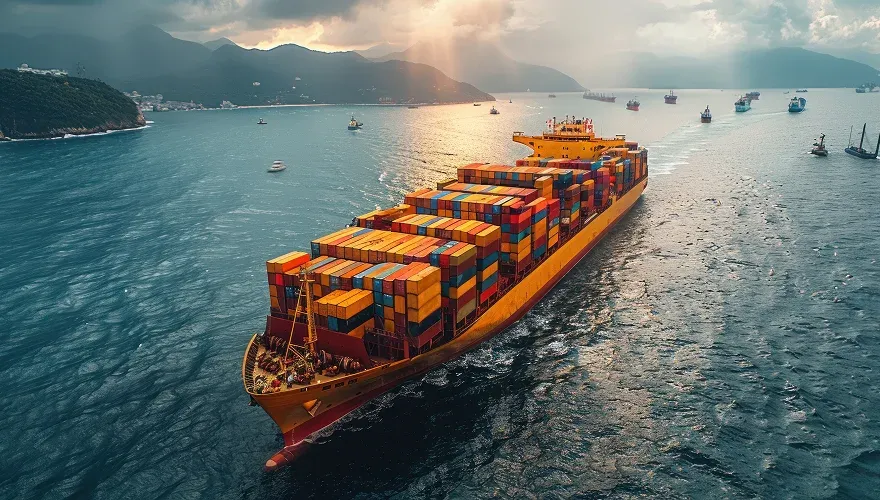
Air freight typically prices between eight and fourteen times ocean on the same lane. That ratio is stable enough to plan around. What is not stable is everything the rate excludes: the working capital tied up in twenty-eight days of transit, the safety stock you hold because the transit is variable, the expedite you pay when the vessel rolls, and the write-down on anything seasonal that arrives late.
Run the comparison on landed cost per unit sold, and the gap narrows sharply for high-value, short-season goods. It widens for anything heavy, cheap and predictable.
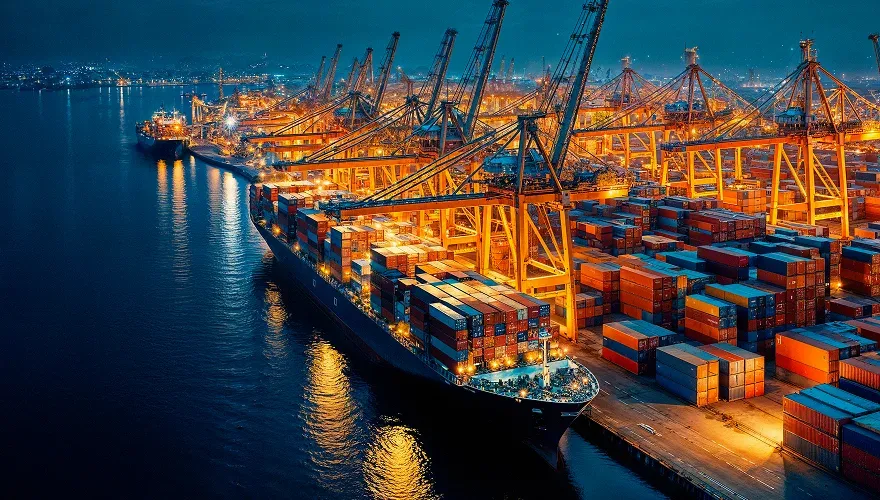
Ocean is the right answer when three things are true at once: the goods are dense relative to their value, demand is forecastable eight to ten weeks out, and a two-week slip is absorbable. That covers most raw materials, most furniture, most non-seasonal apparel and almost all industrial input.
The failure mode is treating the schedule as a promise. Blank sailings and port congestion are structural, not exceptional. Plan against the P90 transit, not the advertised one, and the mode behaves.
Air earns its cost in four situations, and it is worth naming them precisely because “urgent” is not one of them:
Sea-air, and increasingly rail, sit between the two on both axes. Rail on the China–Europe corridors lands around sixteen days at roughly a third of air pricing, with materially lower emissions than either. For shippers with a carbon target and a planning horizon, it is usually the mode that has been under-used.
Build the comparison once, per SKU family, on landed cost per unit sold. Include inventory carrying cost, safety stock, expedite frequency and obsolescence risk. Then set a standing modal policy per family and only revisit it when the underlying economics move — not every time a rate sheet lands.
The teams that do this stop having the ocean-versus-air argument entirely. The answer is already written down.
8–14×
Air freight premium over ocean on the same lane
~28 days
Typical door-to-door ocean transit, Asia to Europe
~⅓
Rail's cost relative to air, at roughly 16 days

Marcus Chen
Head of Ocean Freight
Marcus has spent seventeen years on the carrier side of container shipping, most of it pricing Asia–Europe capacity. He writes about what actually moves rates, and what only looks like it does.
7 min read
A query rate above two percent is not bad luck. It is a data problem with four common causes, and all four are fixable before the shipment moves.
Read the briefing8 min read
Resilience is not a second supplier in a spreadsheet. It is a pre-agreed alternative that someone has actually priced, contracted and tested.
Read the briefing6 min read
Most freight emissions figures are modelled averages dressed up as measurements. Here is the difference, and why auditors have started to care.
Read the briefingNo sales call, no commitments. Just a real number from the same engine 2,400+ shippers use every day.