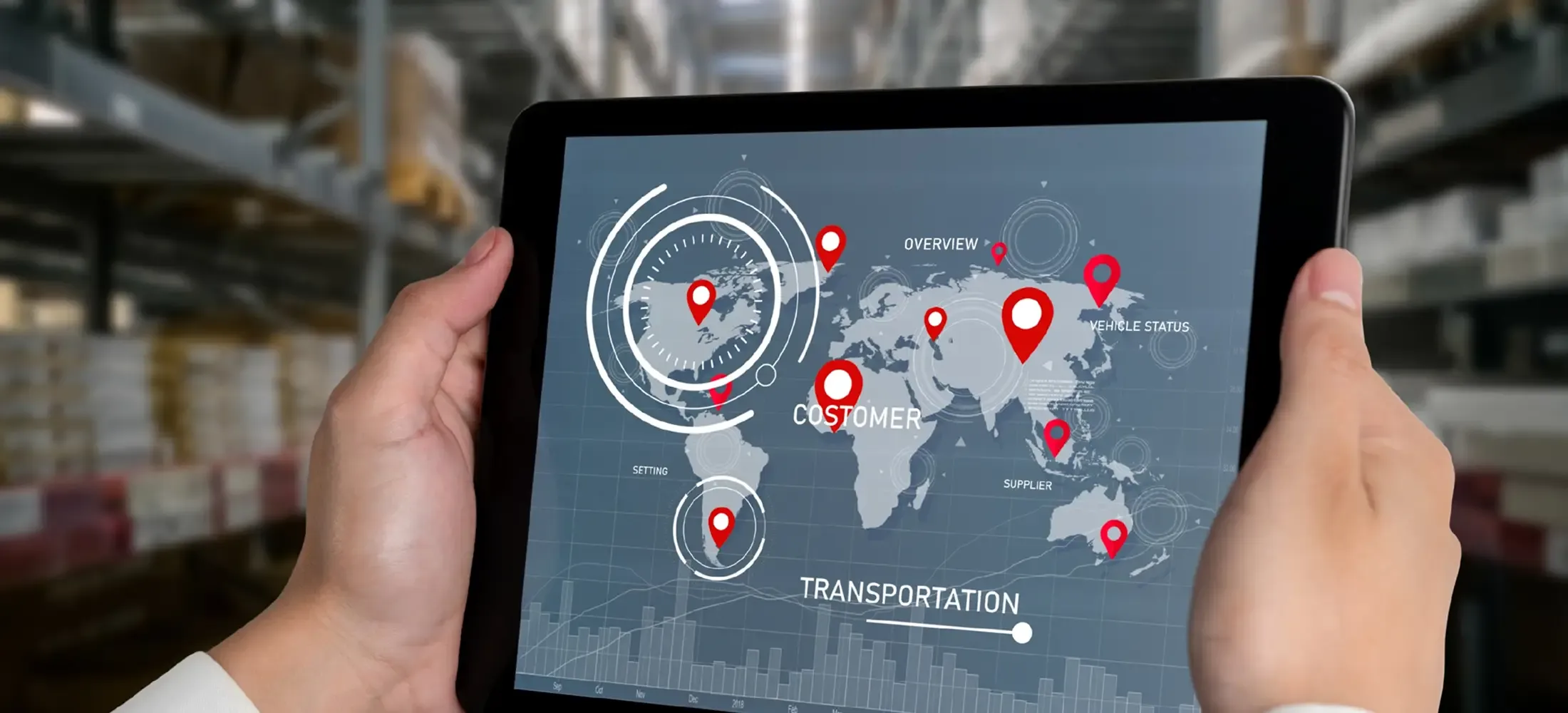
Almost every freight forwarder now offers tracking. Very few offer visibility, and the difference is not a feature list — it is whether the system knows what was supposed to happen.
Position is not status
Knowing a vessel’s coordinates tells you where it is. It does not tell you whether that is where it should be, whether the connection at the transhipment port is still viable, or whether the customs entry has been lodged. Those are the things that change what you do next.
A visibility platform that only reports position has moved the problem from “call the forwarder” to “read the map and then call the forwarder.”
The three signals that matter
Deviation from the original plan. Not the revised ETA — the delta against the plan you built the production schedule on. Systems that quietly overwrite the baseline destroy the only number worth watching.
Exception with an owner. An alert that lands in a shared inbox is not an exception process. Each deviation needs a named owner and a recovery option attached at the moment it is raised.
Downstream impact. A two-day slip matters enormously on one lane and not at all on another. Visibility that does not know which is which produces alert fatigue, and alert fatigue produces missed exceptions.
A practical test
Ask any prospective platform one question: when a leg slips, what does the system do without a human? If the answer is “sends an email”, it is a tracking tool. If the answer includes recalculating downstream impact and surfacing a recovery option, it is a visibility tool.
The distinction is worth insisting on, because the first kind adds a screen to check and the second kind removes a phone call to make.